Under certain conditions, the GBC runs in degraded mode due to limitations in your
environment or configuration. By default, the GBC alerts you when you are running in degraded
mode.
Conditions that trigger degraded mode
Degraded mode is activated in the following cases:
Unavailable APIs: Certain APIs required by GBC, such as the Clipboard API, are missing in
the current environment. In most cases, this is due to the lack of secure context
(external link) (HTTPS or localhost required).
Non-secure context: The application is not running in a secure context (HTTPS or
localhost required).
Unsupported backend versions: The FGL or GAS versions being used are below the minimum
required versions. Check the Genero compatibility for the GBC page
for compatibility with your versions of FGL or GAS.
Alert mechanism
The degraded mode alert mechanism does not modify the internal behavior of the GBC but instead
provides visual alerts and explanatory messages to notify you of potential issues.
Alerts are visible in the following areas of the GBC application interface when degraded mode is detected:
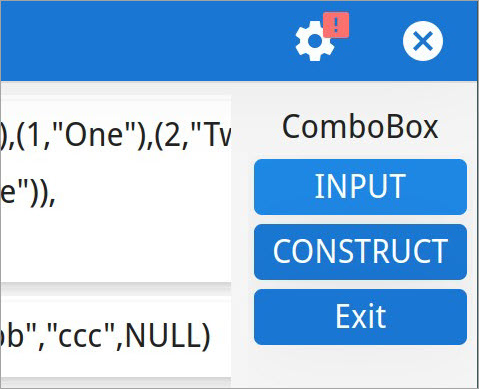
A red badge appears on the Settings icon in the chromebar. This badge
prompts users to check the Settings for more details:
Figure: Degraded mode alert settings icon badge
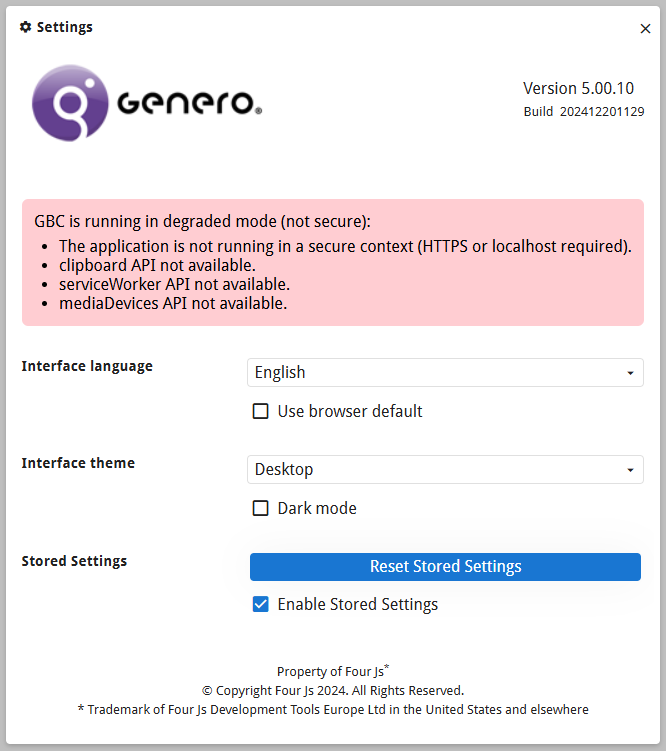
Degraded mode details in the GBC Settings dialog:
Figure: Degraded mode alert in Settings dialog The Settings page displays a detailed message when degraded mode is
active. The message may contain one or more of the following, depending on the detected issues:
A list of unavailable APIs.
A message indicating that the backend versions (FGL/GAS) are not supported.
A message specifying that the application is not running in a secure context.
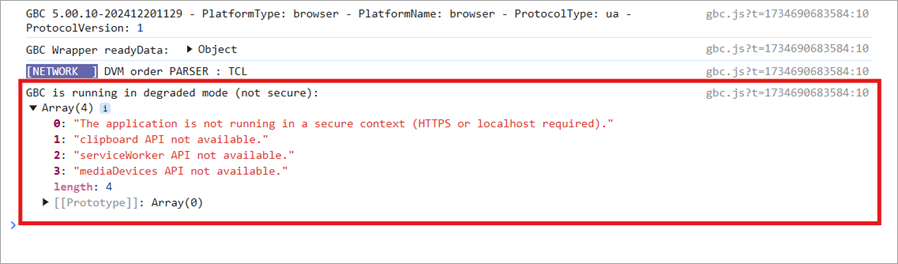
Console message on startup:
A message listing the causes for running in degraded mode is
displayed in the browser console at application startup.Figure: Degraded mode alert in browser console on application startup
Disabling degraded mode alerts
The degraded mode alert mechanism is enabled by default.